
IPL Explained: What Is That Flash of Light Actually Doing to Your Skin?
Learn how Intense Pulsed Light targets pigment, redness, unwanted hair, and signs of sun damage — and why personalized settings matter.

If you’ve ever seen an IPL treatment, you’ve probably noticed one thing immediately: the flash.
It’s bright, quick, and looks a little dramatic. But that little flash is actually doing quite a lot.
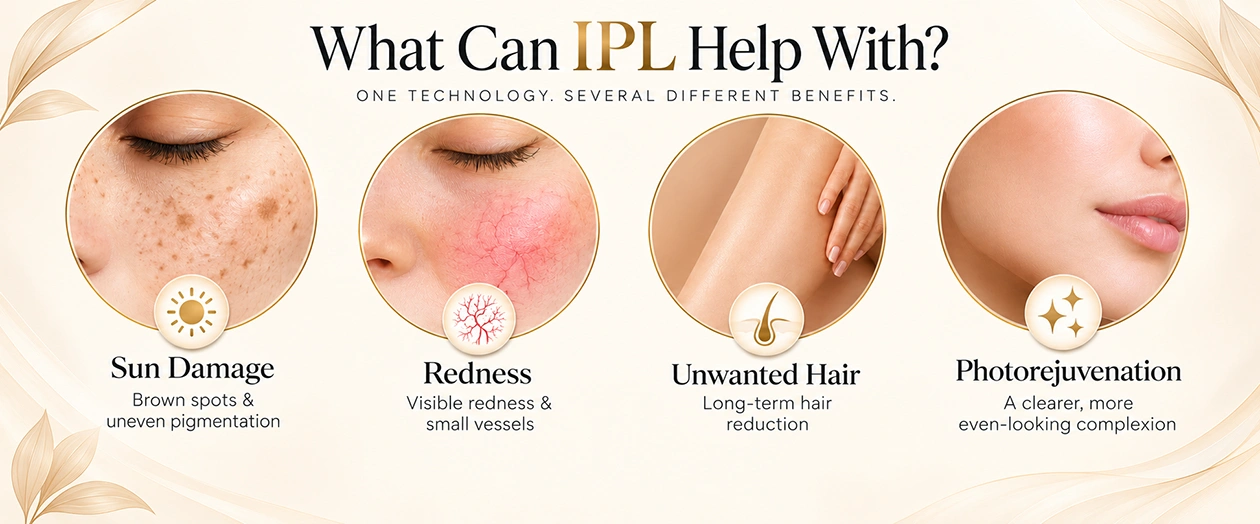
Depending on what we’re treating, IPL can help with sun spots, uneven pigmentation, certain types of redness, visible vessels, unwanted hair, and overall skin tone.
So how can one treatment do so many different things? Surprisingly, the basic idea is pretty simple.
So, How Does IPL Actually Work?
IPL stands for Intense Pulsed Light.
Unlike a laser, which typically uses one specific wavelength of light, IPL uses a broader range. Filters and settings help select the light and energy delivery for the concern we want to target.
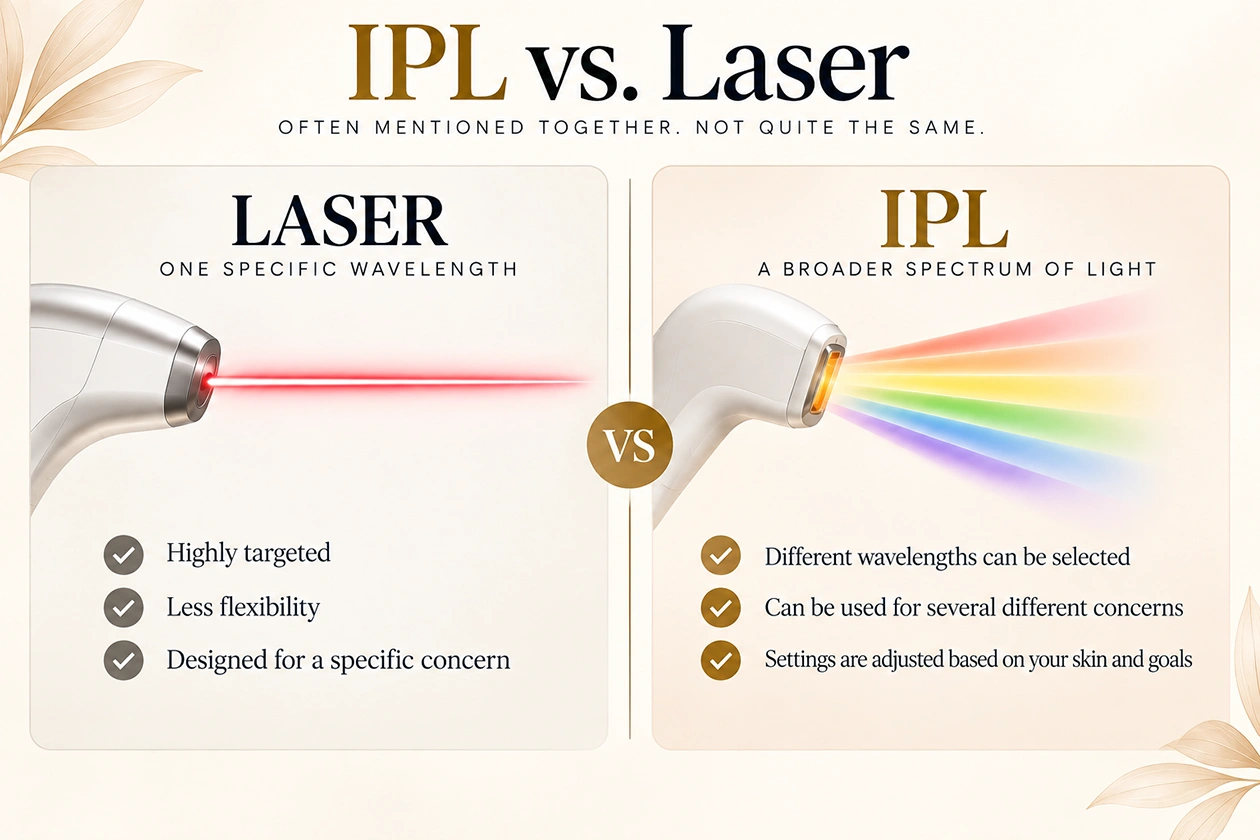
Neither is automatically better. The right choice depends on your skin, the concern, and the device being used.
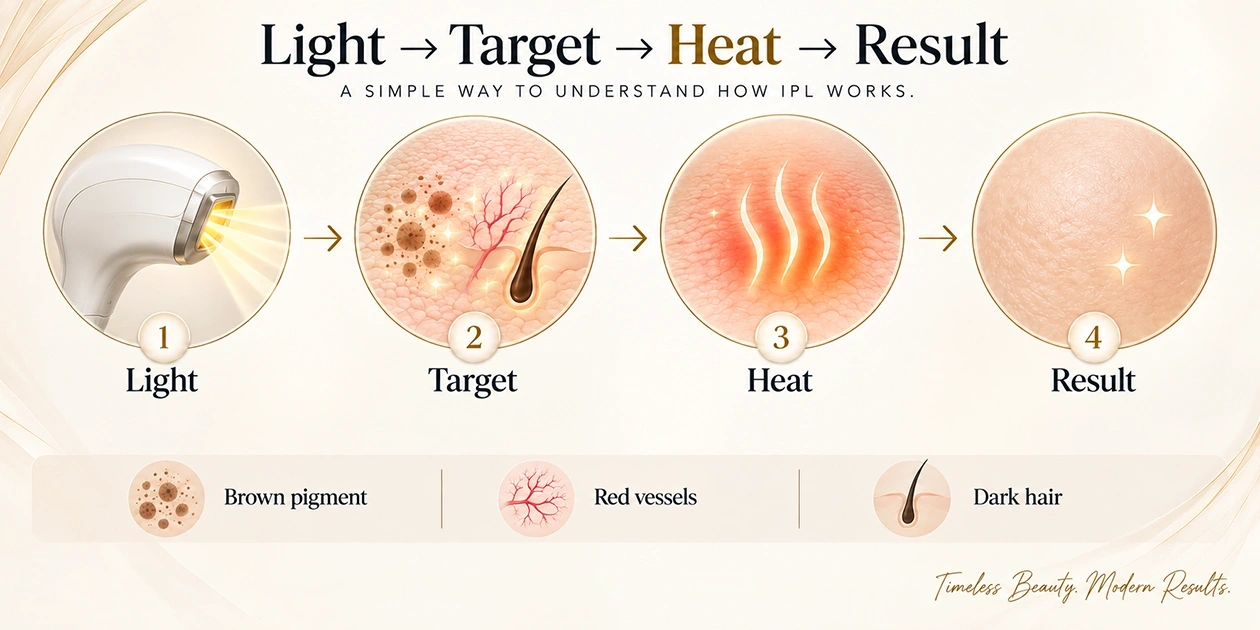
Here’s the easiest way to think about it: certain pigments in your skin and hair absorb particular wavelengths of light.
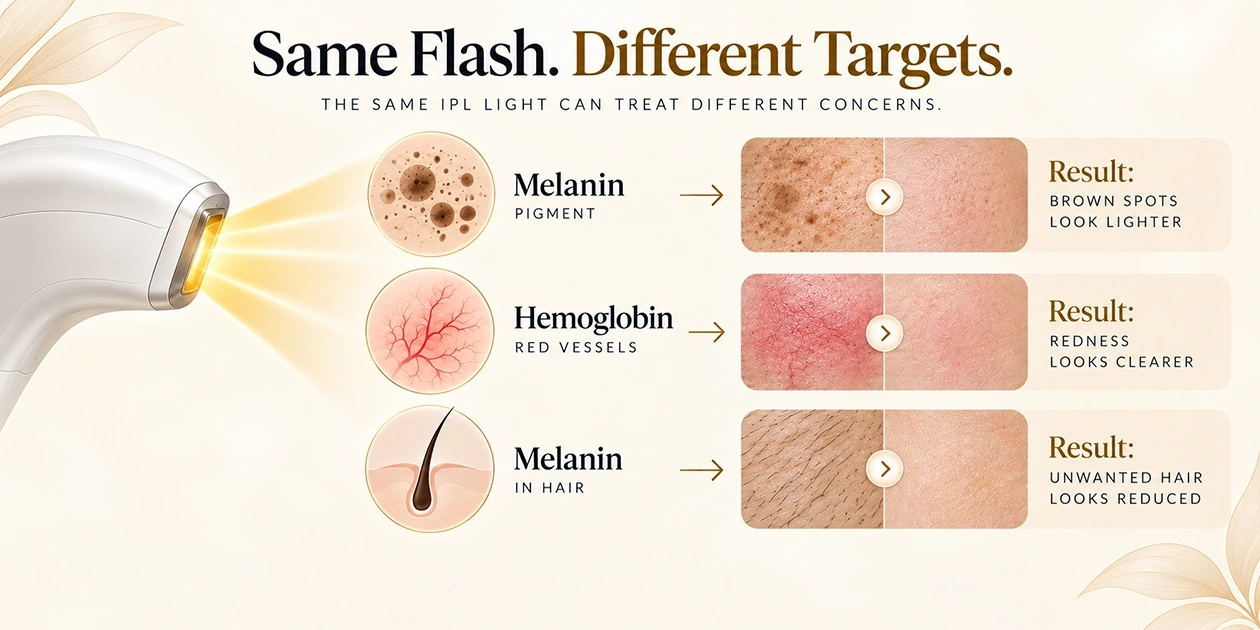
A brown sun spot contains melanin, the pigment that gives skin and hair their color. For visible vessels, the target is hemoglobin in the blood. Dark hair contains melanin too.
IPL takes advantage of these differences. The target absorbs the light, the light turns into heat, and that heat affects the pigment, vessel, or hair follicle we’re treating.
Why Do Brown Spots Sometimes Get Darker After IPL?
This one surprises people.
When IPL targets a brown spot, the pigment absorbs the light. After treatment, that spot may become darker for a few days before it begins to fade.
So yes — the spot you wanted to disappear may temporarily decide to make itself more noticeable first. Very thoughtful of it.
Over the following days, treated superficial pigment can gradually flake or fade away. The timing depends on your skin and the treatment.

What About Redness?
IPL can also target hemoglobin in small visible blood vessels. The absorbed light heats the targeted vessel, which can become less visible as the body responds over time.
That’s why IPL can help with certain types of redness and visible vessels, even though the same machine can also be used for brown pigmentation.
Same flash. Different target.
And What About Hair Removal?
For hair reduction, IPL targets the pigment in the hair. The absorbed light creates heat that damages the follicular structures responsible for producing hair.
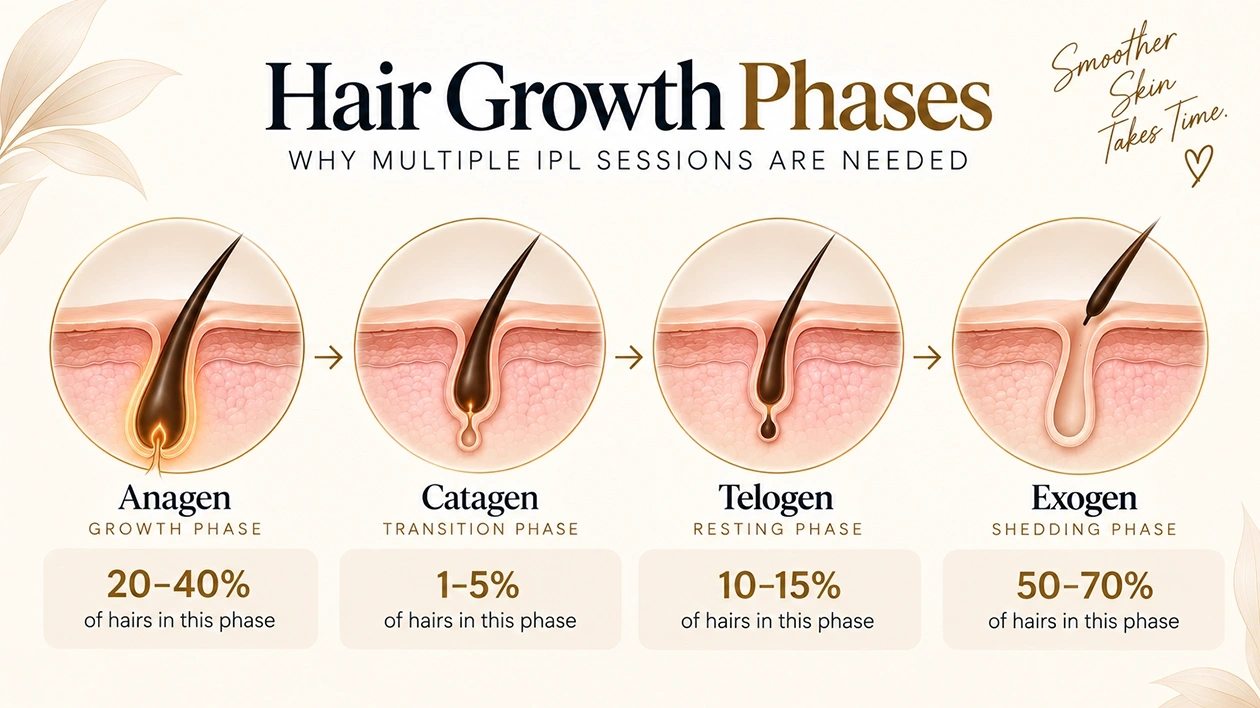
Unfortunately, there’s a catch: not every hair is growing at the same time. Hair follicles, it turns out, prefer to follow their own schedules.
That’s why IPL hair reduction requires a series of treatments. Each session gives us another opportunity to catch hairs during the active growth stage, when they respond best.
Why Aren’t IPL Treatments the Same for Everyone?
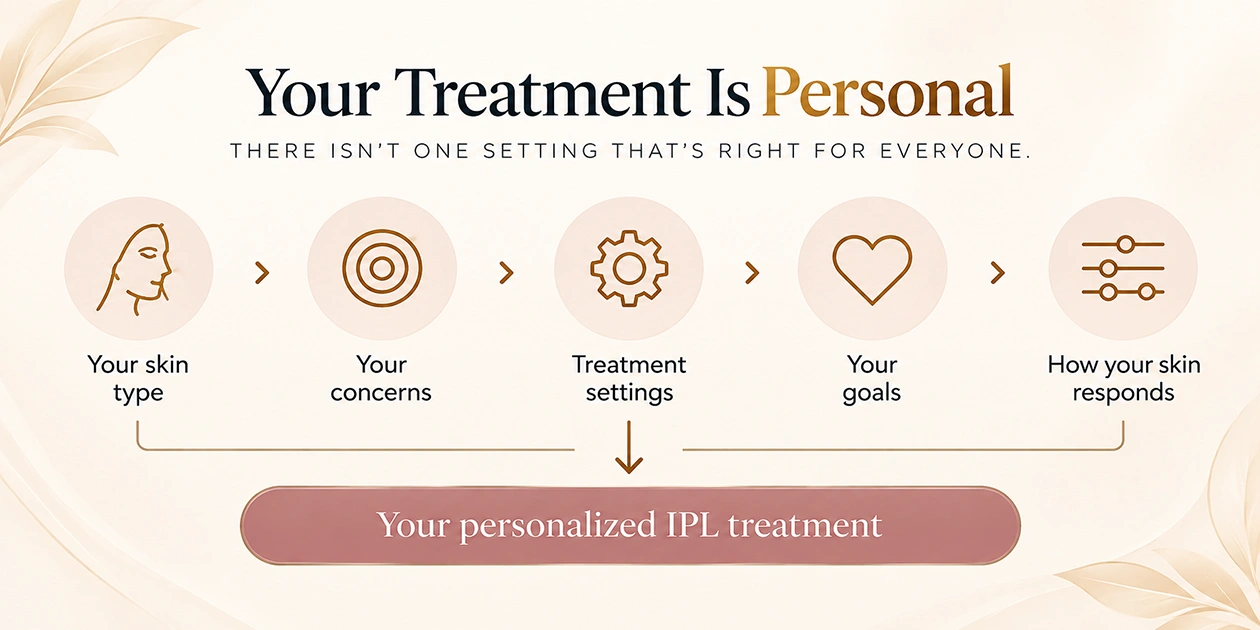
This is one of the most important things to know about IPL: there isn’t one setting that’s right for everybody.
The settings depend on your skin, what we’re treating, the treatment area, and how your skin responds.
Treating a brown sun spot isn’t the same as treating redness. Treating facial pigmentation isn’t the same as reducing unwanted hair. And two people with what appears to be the same concern may still need different settings.
That’s one reason I believe IPL should always start with understanding your skin first.
Can IPL Make My Skin Look Younger?
IPL isn’t about changing your face or making you look like a different person.
What it can do is address some of the things that make skin look less even over time — particularly sun damage, pigmentation, and redness.
Reducing those distractions can leave skin looking clearer, brighter, and more even. That’s why you’ll often hear IPL described as photorejuvenation.
And no, unfortunately it cannot erase every questionable decision involving the sun we’ve made since high school. But it can help with some of the evidence.
Is IPL Right for Everyone?
No — and that’s important.
IPL is a useful tool, but it isn’t the right treatment for every person or every skin concern. Skin tone, recent tanning, medications, and the cause of pigmentation or redness all matter when deciding whether it’s appropriate.
Sometimes IPL makes sense. Sometimes another treatment makes more sense. And sometimes the best thing to do is wait until we understand what’s actually happening with your skin.
That’s why I prefer to start with the skin rather than the machine.
So What Is That Flash Actually Doing?
Quite a bit. Depending on what we’re targeting, that little burst of light can work on brown pigment, redness, visible vessels, or unwanted hair.
But the technology itself is only part of the equation. What matters is understanding what we’re treating, why we’re treating it, and how your skin is likely to respond.
And that’s what I find so interesting about IPL. Behind that very quick flash is a treatment that can be adjusted in many different ways — with one goal: to treat your skin as your skin, not simply as another appointment on the schedule.